Aethersx2 — Armeabi-v7a

Aethersx2 Armeabi-v7a

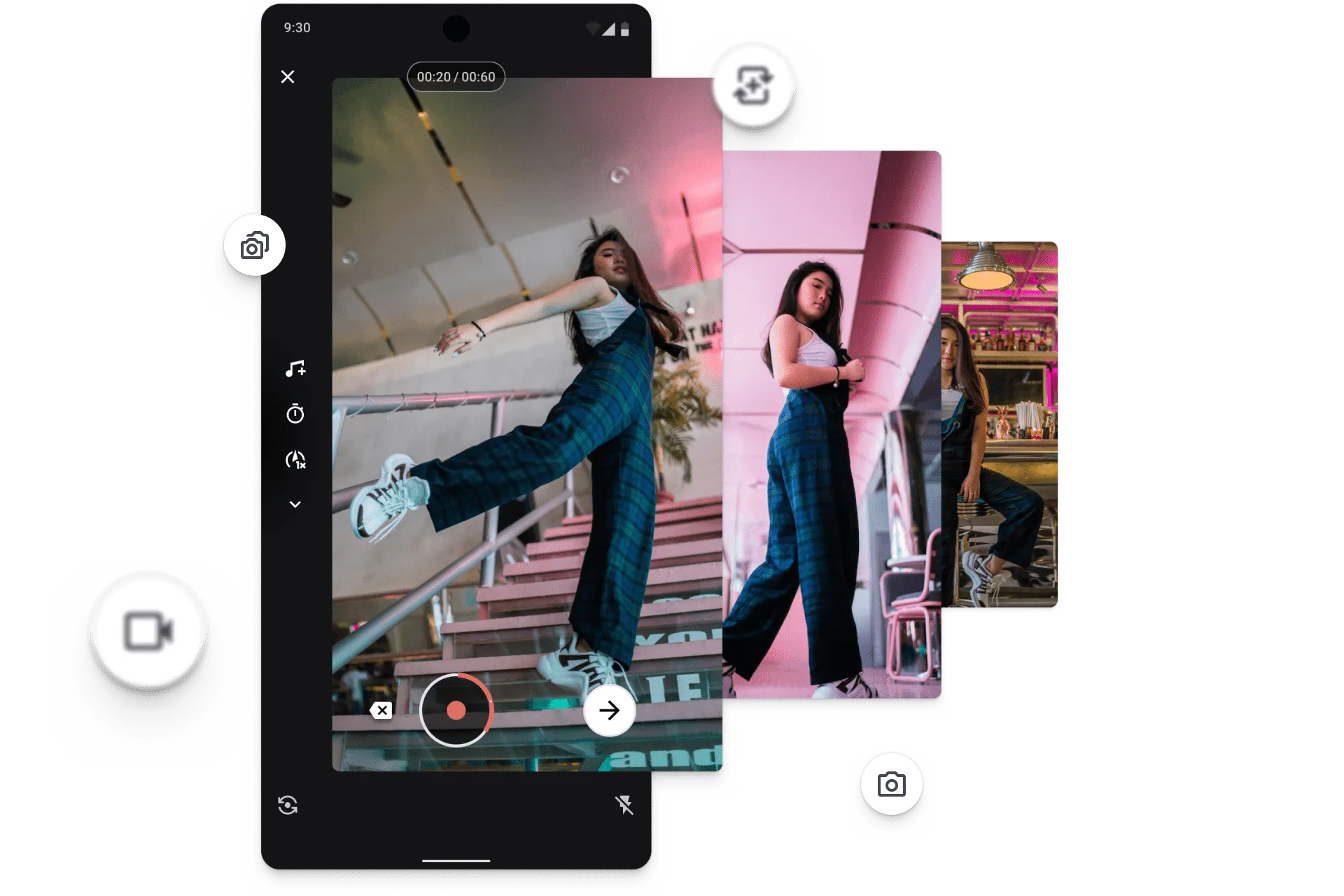
Unlock the full potential of video creation in your app.

Elevate your user experience with features such as simultaneous recording, audio overlays or duets and stitches.

Aethersx2 Armeabi-v7a

The Significance of AetherSX2 for ARMv7a (armeabi-v7a) Architecture The world of mobile emulation has seen remarkable progress over the past decade, transforming smartphones from simple communication tools into powerful portable gaming devices. Among the most ambitious emulation projects is AetherSX2, a PlayStation 2 emulator for Android devices. While much of the discussion surrounding AetherSX2 focuses on its performance on modern 64-bit ARM processors (ARMv8-a), its support for the older 32-bit ARMv7a architecture, often denoted as armeabi-v7a, represents both a technical challenge and a crucial bridge for preserving gaming history on millions of legacy devices. Understanding ARMv7a in the Emulation Landscape ARMv7a, introduced in 2005, was the dominant 32-bit architecture for smartphones and tablets throughout the early 2010s. Devices such as the Samsung Galaxy S II, HTC One M7, Nexus 4, and numerous low-cost Android tablets still in circulation today rely on this instruction set. While modern flagship phones have moved to 64-bit ARMv8-a, a vast install base of ARMv7a devices remains in use globally, particularly in emerging markets and among users less inclined to upgrade regularly. AetherSX2’s decision to support armeabi-v7a is therefore not merely an act of backward compatibility but a statement about accessibility. Emulating the PlayStation 2, a console powered by a 64-bit MIPS processor (Emotion Engine), demands immense computational resources. Achieving this on a 32-bit architecture with limited memory addressing (theoretical maximum of 4GB, often less due to system reservations) and older GPU designs is a formidable engineering feat. Technical Hurdles and Optimizations Running AetherSX2 on ARMv7a involves several compromises and innovations. The most immediate limitation is memory. The PlayStation 2 had 32 MB of main RAM and 4 MB of VRAM, but emulation overhead typically requires 1-2 GB of available RAM. ARMv7a devices rarely have more than 2-3 GB total, and Android’s own memory footprint reduces this further. As a result, the emulator must use aggressive memory management, avoiding redundant allocations and reusing buffers wherever possible. The CPU instruction set also poses challenges. ARMv7a lacks certain instructions that ARMv8-a provides natively, such as advanced SIMD (NEON is present but less capable) and cryptographic acceleration. AetherSX2’s recompiler (also known as a dynamic binary translator) must therefore map PS2’s MIPS instructions to a subset of ARMv7a operations, often requiring more cycles to achieve the same result. The development team has implemented several micro-optimizations, including:

Lightweight recompilation caches : Storing translated code blocks with minimal metadata to conserve RAM. Reduced threading overhead : Consolidating emulation threads to avoid context-switching penalties on older kernels. Texture cache scaling : Downsampling textures dynamically to fit within limited GPU memory.

Performance outcomes vary widely. On a high-end ARMv7a chip like the Qualcomm Snapdragon 805 (Krait 450 cores) with an Adreno 420 GPU, lighter 2D PS2 games such as Dragon Quest VIII or Final Fantasy X may run at playable speeds (30–45 FPS) with moderate frame skipping. However, 3D-intensive titles like God of War II or Shadow of the Colossus typically suffer from severe slowdowns, dropping to 15–25 FPS even with aggressive underclocking of the emulated Emotion Engine. Practical Use Cases and Limitations For users with ARMv7a devices, AetherSX2 can still serve as a useful tool, provided expectations are managed. The emulator includes several profiles labeled “Fast/Unsafe” that disable certain accuracy features (e.g., precise floating-point calculations for VU units) to gain speed. Additionally, enabling the “Skip Presenting Duplicate Frames” option can smooth out perceived framerates, though input latency increases. Notably, AetherSX2 for armeabi-v7a does not support the Vulkan graphics API on most older GPUs (which typically only offer OpenGL ES 3.0 or 3.1). This forces reliance on the OpenGL ES backend, which has higher driver overhead and cannot leverage advanced features like asynchronous compute. Users with Mali-T6xx or PowerVR SGX GPUs may encounter graphical glitches, missing textures, or full rendering failures in games that rely heavily on PS2’s post-processing effects. Preservation and Future Outlook Despite its performance limitations, the ARMv7a version of AetherSX2 remains a remarkable achievement. It allows owners of older tablets and budget phones to experience a taste of PS2 gaming without investing in new hardware. Moreover, it serves as an important preservation tool: many ARMv7a devices have no upgrade path, and once they fail, the ability to test or play certain games on natively running hardware diminishes. However, users should recognize that development focus has shifted toward ARMv8-a and x86_64. The original AetherSX2 project saw its last major updates in late 2022 and early 2023, and newer emulators like NetherSX2 (a community patched version) have also prioritized 64-bit architectures. For those with ARMv7a devices, the best course is to download the final stable AetherSX2 build (version 1.4-3060) that explicitly lists armeabi-v7a support, and to stick with less demanding games. In conclusion, AetherSX2 for armeabi-v7a represents a twilight port—a technically impressive but inevitably constrained attempt to bring sixth-generation console emulation to aging hardware. It honors the principle that emulation should be democratic, not reserved only for the latest flagship phones. While no substitute for the full-speed, high-accuracy experience on modern devices, it extends a lifeline to the vast ecosystem of 32-bit Android hardware, ensuring that the PS2’s legendary library remains accessible to a broader audience for years to come.

Aethersx2 Armeabi-v7a: The Portable Emulation Revolution In the landscape of mobile gaming, few applications have caused as significant a shift in user expectations as Aethersx2 . For years, the prospect of playing Sony PlayStation 2 (PS2) games on a smartphone was a pipe dream reserved for the most expensive flagship devices. However, the release of Aethersx2, specifically builds optimized for the Armeabi-v7a architecture, changed the narrative, bringing high-fidelity console gaming to the masses. This write-up explores the technical significance of the Armeabi-v7a build, its impact on the emulation community, and why it remains a critical piece of software for older and mid-range Android devices. 1. The Context: The PS2 Emulation Barrier The PlayStation 2 is notoriously difficult to emulate. Its proprietary "Emotion Engine" (EE) architecture is complex, requiring substantial computational power to translate PS2 instructions into a language modern processors understand. For years, mobile emulation was dominated by the PPSSPP (PlayStation Portable) and RetroArch cores for older consoles. The PS2, however, remained a fortress. Prior to Aethersx2, Android users relied on Play!, an emulator that prioritized stability and portability but struggled with compatibility and graphical fidelity. Aethersx2 entered the scene as a fork of the legendary desktop emulator PCSX2. By leveraging the codebase of the most mature PS2 emulator available, Aethersx2 instantly provided a library of thousands of playable games. 2. Decoding "Armeabi-v7a" To understand the importance of the Armeabi-v7a build, one must understand Android's processor architecture landscape.

ARM64-v8a: This is the modern standard for contemporary smartphones (e.g., Google Pixel, Samsung Galaxy S series). It supports 64-bit processing and offers high performance and memory addressing. Armeabi-v7a: This refers to the older 32-bit ARM architecture. While "older" suggests obsolescence, the reality is that billions of devices still operate on this architecture. This includes older flagships, budget smartphones, and many "retro gaming" handhelds (like the Anbernic or Retroid lines that use older MediaTek or Rockchip processors).

The release of the Aethersx2 Armeabi-v7a build meant that the developer did not gatekeep PS2 emulation behind a 64-bit hardware requirement. It signaled that PS2 emulation could be a democratic experience, accessible to users who had not purchased a phone in the last two years. 3. Technical Challenges and Optimization Emulating the PS2 on a 32-bit architecture presents specific engineering hurdles:

Memory Constraints: 32-bit processors are limited to addressing 4GB of RAM. Modern games often require more; however, PS2 games were designed for 32MB of RAM. Aethersx2 manages this by aggressively mapping the PS2’s limited memory into the phone’s address space. The Armeabi-v7a build is optimized to squeeze every byte of efficiency out of the 4GB limit. NEON SIMD: A critical feature of Armeabi-v7a is the NEON instruction set (Single Instruction, Multiple Data). Aethersx2 utilizes NEON to handle vector operations required for PS2 graphics and audio. This allows the CPU to process multiple data points simultaneously, which is vital for rendering 3D environments in games like Kingdom Hearts or Grand Theft Auto: San Andreas on lower-end hardware.

4. Performance on Modest Hardware The Armeabi-v7a build of Aethersx2 is a testament to software optimization. While it cannot perform miracles—a low-end processor will still struggle with demanding titles—it significantly lowers the barrier to entry. On a device running Armeabi-v7a, users can typically achieve full speed (30 or 60 FPS) on 2D titles or early 3D games. For example:

Castlevania: Symphony of the Night runs flawlessly. Bully and Manhunt are often playable with minor frame drops. Dragon Ball Z: Budokai Tenkaichi 3 , a cult favorite, is playable on surprisingly mid-range 32-bit chipsets.

The build also includes "App Compat" modes. Users on 32-bit devices often utilize the OpenGL rendering backend, as Vulkan support (a more modern graphics API) is less consistent on older hardware. Aethersx2 Armeabi-v7a shines in its fallback options, ensuring that even if a device lacks modern GPU drivers, the software renderer or older OpenGL modes can still provide a playable experience. 5. The Legacy and The End of Development It is important to note that Aethersx2 is no longer actively updated. The developer, Tahlreth, ceased development of the app, making the existing versions the final public builds. This makes the existing Armeabi-v7a APK a historical artifact. Because it is no longer in development, users of 32-bit devices have a "snapshot" of emulation capability. While newer forks and successors (like NetherSX2 or the desktop-focused PCSX2 updates) have moved primarily toward ARM64 optimization, the Aethersx2 Armeabi-v7a build remains the gold standard for the older hardware demographic. It is often patched by the community (creating "Mods" of the original app) to fix bugs that the original developer left behind, ensuring the 32-bit ecosystem survives. 6. Conclusion Aethersx2 Armeabi-v7a represents a pivotal moment in mobile gaming history. It proved that PS2 emulation was not merely a technical showcase for $1,000 phones but a viable reality for the broader market. By supporting the 32-bit architecture, the developers bridged the gap between generations, allowing a used $100 phone to run classics like Shadow of the Colossus or Final Fantasy X . While the industry moves inevitably toward 64-bit architecture, the Armeabi-v7a build stands as a monument to efficiency and inclusivity in the open-source emulation community. For anyone holding onto an older device or purchasing a budget retro-handheld, the Aethersx2 Armeabi-v7a build remains an essential installation.

AetherSX2 does not natively support the armeabi-v7a (32-bit) architecture. When exploring mobile PlayStation 2 emulation, many users search for an Aethersx2 Armeabi-v7a APK to run games on older or budget-friendly 32-bit Android hardware. However, the reality of the emulator’s architecture requirements often leads to confusion. Understanding the core limitations of the 32-bit structure reveals why a functional version of this specific APK does not exist, and what alternatives you can explore instead. The Reality Behind "AetherSX2 Armeabi-v7a" Android applications rely on specific Application Binary Interfaces (ABIs) to communicate with a device's CPU. The two most common are: arm64-v8a : The standard 64-bit architecture used by modern processors. armeabi-v7a : An older 32-bit architecture found in legacy or ultra-budget chipsets. The original developer of AetherSX2 explicitly built the emulator exclusively for 64-bit ( arm64-v8a ) devices . Any website claiming to offer a modified or patched "AetherSX2 Armeabi-v7a APK" is highly likely distribution of malware, adware, or a completely different app altogether. Why PS2 Emulation Requires 64-Bit (arm64-v8a) Emulating the PlayStation 2's complex "Emotion Engine" CPU demands an immense amount of processing power and specific architectural instructions. A 32-bit system ( armeabi-v7a ) simply cannot keep up for several structural reasons: 1. Lack of Memory Mapping Space A 32-bit architecture is mathematically capped at addressing 4GB of RAM . In contrast, the hardware virtualization required to seamlessly map out the PS2's system states, memory channels, and graphical subsystems requires a much larger, 64-bit virtual memory address space to prevent constant system crashes. 2. Vector Units and CPU Registers The PS2 relies heavily on 128-bit SIMD (Single Instruction, Multiple Data) vector units. Modern arm64-v8a processors feature advanced NEON registers that can map these instructions much more efficiently than old armeabi-v7a chips. Forcing a 32-bit CPU to recalculate these commands requires tedious instruction splitting, which degrades performance to an unplayable crawl. 3. Developer Optimization Constraints The emulator's underlying code utilizes specialized just-in-time (JIT) recompilers optimized specifically for 64-bit assembly code. Translating this entire architecture to a 32-bit framework would require rewriting the core application from scratch, a task that has never been undertaken. How to Check Your Device Architecture Some smartphones feature a 64-bit capable CPU, but the manufacturer installs a 32-bit version of Android to save on system resource overhead (a common practice with budget devices like the Samsung Galaxy A-series or certain Moto G models). To confirm if your device can run the legitimate 64-bit emulator: Download a hardware diagnostic app like Inware or AIDA64 from the Google Play Store. Navigate to the Processor or CPU tab. Look for the Supported ABIs or Instruction Set line. If it list only armeabi-v7a , your device cannot run AetherSX2. If it lists arm64-v8a , you can run the emulator safely. Alternative Options for 32-Bit Devices If you are strictly limited to an armeabi-v7a device, you cannot run standard PS2 games via AetherSX2. However, you still have functional retro gaming alternatives: +-----------------------------------+-----------------------------------+ | Emulator Name | Supported Systems / Notes | +-----------------------------------+-----------------------------------+ | Play! Emulator | Experimental 32-bit PS2 engine | | | (Runs at incredibly low framerates)1.3.2| +-----------------------------------+-----------------------------------+ | DuckStation | Flawless PlayStation 1 (PSX) | | | emulation on budget hardware | +-----------------------------------+-----------------------------------+ | PPSSPP | Excellent PSP emulation; highly | | | optimized for armeabi-v7a | +-----------------------------------+-----------------------------------+ | RetroArch | Multi-system frontend featuring | | | SNES, Genesis, and GBA cores | +-----------------------------------+-----------------------------------+ The State of Modern Mobile PS2 Emulation The original development of AetherSX2 was indefinitely suspended by its creator. However, the emulation community has kept the platform alive through forks and community optimization efforts. For users who possess a verified arm64-v8a device, the premier way to experience PS2 gaming on Android is through NetherSX2 . NetherSX2 operates as a community-driven patch applied to the final, clean builds of AetherSX2. It strips out unwanted advertisements, fixes frontend bugs, and optimizes performance for modern mobile chipsets without compromising the core architecture. If you'd like to find a way to make games run on your current setup, let me know: What is the exact model of your phone ? Which specific PS2 games are you hoping to play? Share public link This public link is valid for 7 days and shares a thread, including any personal information you added. This link or copies made by others cannot be deleted. If you share with third parties, their policies apply. Can’t copy the link right now. Try again later. Is PLAY! PS2 Emulator meant to be compatible for 32 bit phones?

If you’re looking for a version of the AetherSX2 emulator that runs on armeabi-v7a (32-bit) architecture, the short answer is that it does not exist . AetherSX2 was designed exclusively for 64-bit Android devices. Here is a breakdown of why this architecture isn't supported and what your options are if you have a 32-bit device. Why AetherSX2 requires 64-bit (arm64-v8a) AetherSX2 is a high-performance PlayStation 2 emulator. Emulating the PS2’s complex "Emotion Engine" architecture requires significant processing power and memory addressing that older 32-bit systems simply cannot handle efficiently. Architecture Lock: All official builds, including the final versions (v1.5-4248), are compiled strictly for Hardware Requirements: The developer recommends at least a Snapdragon 845 or equivalent for playable performance. Most devices with these chips are natively 64-bit. Software Limitation: Even if you have a 64-bit capable CPU, some budget manufacturers "soft lock" the Android OS to 32-bit mode to save on RAM, which still prevents AetherSX2 from running. Alternatives for 32-bit (armeabi-v7a) Users If your device is limited to the armeabi-v7a instruction set, you cannot run AetherSX2 or its modern fork, . However, you have a few other paths: Is PLAY! PS2 Emulator meant to be compatible for 32 bit phones?

Your partner in crime

Why IMG.LY ?

Aethersx2 Armeabi-v7a

Battle-tested

Our SDK has matured in demanding environments, powering 500+ million creations per month.

Aethersx2 Armeabi-v7a

Scalable & Future-Proof

We regularly release new features and improvements to help you stay ahead of industry shifts.

Aethersx2 Armeabi-v7a

Customization

Our SDK can be flexibly customized, you can even build custom UIs and extend the editor functionality.

Aethersx2 Armeabi-v7a

Cross-platform

Our SDK is optimized across platforms ensuring consistent rendering and interoperability.

And there’s more

Check Out Other Use Cases

Learn more about related solutions.

Aethersx2 — Armeabi-v7a

The Significance of AetherSX2 for ARMv7a (armeabi-v7a) Architecture The world of mobile emulation has seen remarkable progress over the past decade, transforming smartphones from simple communication tools into powerful portable gaming devices. Among the most ambitious emulation projects is AetherSX2, a PlayStation 2 emulator for Android devices. While much of the discussion surrounding AetherSX2 focuses on its performance on modern 64-bit ARM processors (ARMv8-a), its support for the older 32-bit ARMv7a architecture, often denoted as armeabi-v7a, represents both a technical challenge and a crucial bridge for preserving gaming history on millions of legacy devices. Understanding ARMv7a in the Emulation Landscape ARMv7a, introduced in 2005, was the dominant 32-bit architecture for smartphones and tablets throughout the early 2010s. Devices such as the Samsung Galaxy S II, HTC One M7, Nexus 4, and numerous low-cost Android tablets still in circulation today rely on this instruction set. While modern flagship phones have moved to 64-bit ARMv8-a, a vast install base of ARMv7a devices remains in use globally, particularly in emerging markets and among users less inclined to upgrade regularly. AetherSX2’s decision to support armeabi-v7a is therefore not merely an act of backward compatibility but a statement about accessibility. Emulating the PlayStation 2, a console powered by a 64-bit MIPS processor (Emotion Engine), demands immense computational resources. Achieving this on a 32-bit architecture with limited memory addressing (theoretical maximum of 4GB, often less due to system reservations) and older GPU designs is a formidable engineering feat. Technical Hurdles and Optimizations Running AetherSX2 on ARMv7a involves several compromises and innovations. The most immediate limitation is memory. The PlayStation 2 had 32 MB of main RAM and 4 MB of VRAM, but emulation overhead typically requires 1-2 GB of available RAM. ARMv7a devices rarely have more than 2-3 GB total, and Android’s own memory footprint reduces this further. As a result, the emulator must use aggressive memory management, avoiding redundant allocations and reusing buffers wherever possible. The CPU instruction set also poses challenges. ARMv7a lacks certain instructions that ARMv8-a provides natively, such as advanced SIMD (NEON is present but less capable) and cryptographic acceleration. AetherSX2’s recompiler (also known as a dynamic binary translator) must therefore map PS2’s MIPS instructions to a subset of ARMv7a operations, often requiring more cycles to achieve the same result. The development team has implemented several micro-optimizations, including:

Lightweight recompilation caches : Storing translated code blocks with minimal metadata to conserve RAM. Reduced threading overhead : Consolidating emulation threads to avoid context-switching penalties on older kernels. Texture cache scaling : Downsampling textures dynamically to fit within limited GPU memory.

Performance outcomes vary widely. On a high-end ARMv7a chip like the Qualcomm Snapdragon 805 (Krait 450 cores) with an Adreno 420 GPU, lighter 2D PS2 games such as Dragon Quest VIII or Final Fantasy X may run at playable speeds (30–45 FPS) with moderate frame skipping. However, 3D-intensive titles like God of War II or Shadow of the Colossus typically suffer from severe slowdowns, dropping to 15–25 FPS even with aggressive underclocking of the emulated Emotion Engine. Practical Use Cases and Limitations For users with ARMv7a devices, AetherSX2 can still serve as a useful tool, provided expectations are managed. The emulator includes several profiles labeled “Fast/Unsafe” that disable certain accuracy features (e.g., precise floating-point calculations for VU units) to gain speed. Additionally, enabling the “Skip Presenting Duplicate Frames” option can smooth out perceived framerates, though input latency increases. Notably, AetherSX2 for armeabi-v7a does not support the Vulkan graphics API on most older GPUs (which typically only offer OpenGL ES 3.0 or 3.1). This forces reliance on the OpenGL ES backend, which has higher driver overhead and cannot leverage advanced features like asynchronous compute. Users with Mali-T6xx or PowerVR SGX GPUs may encounter graphical glitches, missing textures, or full rendering failures in games that rely heavily on PS2’s post-processing effects. Preservation and Future Outlook Despite its performance limitations, the ARMv7a version of AetherSX2 remains a remarkable achievement. It allows owners of older tablets and budget phones to experience a taste of PS2 gaming without investing in new hardware. Moreover, it serves as an important preservation tool: many ARMv7a devices have no upgrade path, and once they fail, the ability to test or play certain games on natively running hardware diminishes. However, users should recognize that development focus has shifted toward ARMv8-a and x86_64. The original AetherSX2 project saw its last major updates in late 2022 and early 2023, and newer emulators like NetherSX2 (a community patched version) have also prioritized 64-bit architectures. For those with ARMv7a devices, the best course is to download the final stable AetherSX2 build (version 1.4-3060) that explicitly lists armeabi-v7a support, and to stick with less demanding games. In conclusion, AetherSX2 for armeabi-v7a represents a twilight port—a technically impressive but inevitably constrained attempt to bring sixth-generation console emulation to aging hardware. It honors the principle that emulation should be democratic, not reserved only for the latest flagship phones. While no substitute for the full-speed, high-accuracy experience on modern devices, it extends a lifeline to the vast ecosystem of 32-bit Android hardware, ensuring that the PS2’s legendary library remains accessible to a broader audience for years to come.

Aethersx2 Armeabi-v7a: The Portable Emulation Revolution In the landscape of mobile gaming, few applications have caused as significant a shift in user expectations as Aethersx2 . For years, the prospect of playing Sony PlayStation 2 (PS2) games on a smartphone was a pipe dream reserved for the most expensive flagship devices. However, the release of Aethersx2, specifically builds optimized for the Armeabi-v7a architecture, changed the narrative, bringing high-fidelity console gaming to the masses. This write-up explores the technical significance of the Armeabi-v7a build, its impact on the emulation community, and why it remains a critical piece of software for older and mid-range Android devices. 1. The Context: The PS2 Emulation Barrier The PlayStation 2 is notoriously difficult to emulate. Its proprietary "Emotion Engine" (EE) architecture is complex, requiring substantial computational power to translate PS2 instructions into a language modern processors understand. For years, mobile emulation was dominated by the PPSSPP (PlayStation Portable) and RetroArch cores for older consoles. The PS2, however, remained a fortress. Prior to Aethersx2, Android users relied on Play!, an emulator that prioritized stability and portability but struggled with compatibility and graphical fidelity. Aethersx2 entered the scene as a fork of the legendary desktop emulator PCSX2. By leveraging the codebase of the most mature PS2 emulator available, Aethersx2 instantly provided a library of thousands of playable games. 2. Decoding "Armeabi-v7a" To understand the importance of the Armeabi-v7a build, one must understand Android's processor architecture landscape. Aethersx2 Armeabi-v7a

ARM64-v8a: This is the modern standard for contemporary smartphones (e.g., Google Pixel, Samsung Galaxy S series). It supports 64-bit processing and offers high performance and memory addressing. Armeabi-v7a: This refers to the older 32-bit ARM architecture. While "older" suggests obsolescence, the reality is that billions of devices still operate on this architecture. This includes older flagships, budget smartphones, and many "retro gaming" handhelds (like the Anbernic or Retroid lines that use older MediaTek or Rockchip processors).

The release of the Aethersx2 Armeabi-v7a build meant that the developer did not gatekeep PS2 emulation behind a 64-bit hardware requirement. It signaled that PS2 emulation could be a democratic experience, accessible to users who had not purchased a phone in the last two years. 3. Technical Challenges and Optimization Emulating the PS2 on a 32-bit architecture presents specific engineering hurdles:

Memory Constraints: 32-bit processors are limited to addressing 4GB of RAM. Modern games often require more; however, PS2 games were designed for 32MB of RAM. Aethersx2 manages this by aggressively mapping the PS2’s limited memory into the phone’s address space. The Armeabi-v7a build is optimized to squeeze every byte of efficiency out of the 4GB limit. NEON SIMD: A critical feature of Armeabi-v7a is the NEON instruction set (Single Instruction, Multiple Data). Aethersx2 utilizes NEON to handle vector operations required for PS2 graphics and audio. This allows the CPU to process multiple data points simultaneously, which is vital for rendering 3D environments in games like Kingdom Hearts or Grand Theft Auto: San Andreas on lower-end hardware. some budget manufacturers &#34

4. Performance on Modest Hardware The Armeabi-v7a build of Aethersx2 is a testament to software optimization. While it cannot perform miracles—a low-end processor will still struggle with demanding titles—it significantly lowers the barrier to entry. On a device running Armeabi-v7a, users can typically achieve full speed (30 or 60 FPS) on 2D titles or early 3D games. For example:

Castlevania: Symphony of the Night runs flawlessly. Bully and Manhunt are often playable with minor frame drops. Dragon Ball Z: Budokai Tenkaichi 3 , a cult favorite, is playable on surprisingly mid-range 32-bit chipsets.

The build also includes "App Compat" modes. Users on 32-bit devices often utilize the OpenGL rendering backend, as Vulkan support (a more modern graphics API) is less consistent on older hardware. Aethersx2 Armeabi-v7a shines in its fallback options, ensuring that even if a device lacks modern GPU drivers, the software renderer or older OpenGL modes can still provide a playable experience. 5. The Legacy and The End of Development It is important to note that Aethersx2 is no longer actively updated. The developer, Tahlreth, ceased development of the app, making the existing versions the final public builds. This makes the existing Armeabi-v7a APK a historical artifact. Because it is no longer in development, users of 32-bit devices have a "snapshot" of emulation capability. While newer forks and successors (like NetherSX2 or the desktop-focused PCSX2 updates) have moved primarily toward ARM64 optimization, the Aethersx2 Armeabi-v7a build remains the gold standard for the older hardware demographic. It is often patched by the community (creating "Mods" of the original app) to fix bugs that the original developer left behind, ensuring the 32-bit ecosystem survives. 6. Conclusion Aethersx2 Armeabi-v7a represents a pivotal moment in mobile gaming history. It proved that PS2 emulation was not merely a technical showcase for $1,000 phones but a viable reality for the broader market. By supporting the 32-bit architecture, the developers bridged the gap between generations, allowing a used $100 phone to run classics like Shadow of the Colossus or Final Fantasy X . While the industry moves inevitably toward 64-bit architecture, the Armeabi-v7a build stands as a monument to efficiency and inclusivity in the open-source emulation community. For anyone holding onto an older device or purchasing a budget retro-handheld, the Aethersx2 Armeabi-v7a build remains an essential installation. including the final versions (v1.5-4248)

AetherSX2 does not natively support the armeabi-v7a (32-bit) architecture. When exploring mobile PlayStation 2 emulation, many users search for an Aethersx2 Armeabi-v7a APK to run games on older or budget-friendly 32-bit Android hardware. However, the reality of the emulator’s architecture requirements often leads to confusion. Understanding the core limitations of the 32-bit structure reveals why a functional version of this specific APK does not exist, and what alternatives you can explore instead. The Reality Behind "AetherSX2 Armeabi-v7a" Android applications rely on specific Application Binary Interfaces (ABIs) to communicate with a device's CPU. The two most common are: arm64-v8a : The standard 64-bit architecture used by modern processors. armeabi-v7a : An older 32-bit architecture found in legacy or ultra-budget chipsets. The original developer of AetherSX2 explicitly built the emulator exclusively for 64-bit ( arm64-v8a ) devices . Any website claiming to offer a modified or patched "AetherSX2 Armeabi-v7a APK" is highly likely distribution of malware, adware, or a completely different app altogether. Why PS2 Emulation Requires 64-Bit (arm64-v8a) Emulating the PlayStation 2's complex "Emotion Engine" CPU demands an immense amount of processing power and specific architectural instructions. A 32-bit system ( armeabi-v7a ) simply cannot keep up for several structural reasons: 1. Lack of Memory Mapping Space A 32-bit architecture is mathematically capped at addressing 4GB of RAM . In contrast, the hardware virtualization required to seamlessly map out the PS2's system states, memory channels, and graphical subsystems requires a much larger, 64-bit virtual memory address space to prevent constant system crashes. 2. Vector Units and CPU Registers The PS2 relies heavily on 128-bit SIMD (Single Instruction, Multiple Data) vector units. Modern arm64-v8a processors feature advanced NEON registers that can map these instructions much more efficiently than old armeabi-v7a chips. Forcing a 32-bit CPU to recalculate these commands requires tedious instruction splitting, which degrades performance to an unplayable crawl. 3. Developer Optimization Constraints The emulator's underlying code utilizes specialized just-in-time (JIT) recompilers optimized specifically for 64-bit assembly code. Translating this entire architecture to a 32-bit framework would require rewriting the core application from scratch, a task that has never been undertaken. How to Check Your Device Architecture Some smartphones feature a 64-bit capable CPU, but the manufacturer installs a 32-bit version of Android to save on system resource overhead (a common practice with budget devices like the Samsung Galaxy A-series or certain Moto G models). To confirm if your device can run the legitimate 64-bit emulator: Download a hardware diagnostic app like Inware or AIDA64 from the Google Play Store. Navigate to the Processor or CPU tab. Look for the Supported ABIs or Instruction Set line. If it list only armeabi-v7a , your device cannot run AetherSX2. If it lists arm64-v8a , you can run the emulator safely. Alternative Options for 32-Bit Devices If you are strictly limited to an armeabi-v7a device, you cannot run standard PS2 games via AetherSX2. However, you still have functional retro gaming alternatives: +-----------------------------------+-----------------------------------+ | Emulator Name | Supported Systems / Notes | +-----------------------------------+-----------------------------------+ | Play! Emulator | Experimental 32-bit PS2 engine | | | (Runs at incredibly low framerates)1.3.2| +-----------------------------------+-----------------------------------+ | DuckStation | Flawless PlayStation 1 (PSX) | | | emulation on budget hardware | +-----------------------------------+-----------------------------------+ | PPSSPP | Excellent PSP emulation; highly | | | optimized for armeabi-v7a | +-----------------------------------+-----------------------------------+ | RetroArch | Multi-system frontend featuring | | | SNES, Genesis, and GBA cores | +-----------------------------------+-----------------------------------+ The State of Modern Mobile PS2 Emulation The original development of AetherSX2 was indefinitely suspended by its creator. However, the emulation community has kept the platform alive through forks and community optimization efforts. For users who possess a verified arm64-v8a device, the premier way to experience PS2 gaming on Android is through NetherSX2 . NetherSX2 operates as a community-driven patch applied to the final, clean builds of AetherSX2. It strips out unwanted advertisements, fixes frontend bugs, and optimizes performance for modern mobile chipsets without compromising the core architecture. If you'd like to find a way to make games run on your current setup, let me know: What is the exact model of your phone ? Which specific PS2 games are you hoping to play? Share public link This public link is valid for 7 days and shares a thread, including any personal information you added. This link or copies made by others cannot be deleted. If you share with third parties, their policies apply. Can’t copy the link right now. Try again later. Is PLAY! PS2 Emulator meant to be compatible for 32 bit phones?

If you’re looking for a version of the AetherSX2 emulator that runs on armeabi-v7a (32-bit) architecture, the short answer is that it does not exist . AetherSX2 was designed exclusively for 64-bit Android devices. Here is a breakdown of why this architecture isn't supported and what your options are if you have a 32-bit device. Why AetherSX2 requires 64-bit (arm64-v8a) AetherSX2 is a high-performance PlayStation 2 emulator. Emulating the PS2’s complex "Emotion Engine" architecture requires significant processing power and memory addressing that older 32-bit systems simply cannot handle efficiently. Architecture Lock: All official builds, including the final versions (v1.5-4248), are compiled strictly for Hardware Requirements: The developer recommends at least a Snapdragon 845 or equivalent for playable performance. Most devices with these chips are natively 64-bit. Software Limitation: Even if you have a 64-bit capable CPU, some budget manufacturers "soft lock" the Android OS to 32-bit mode to save on RAM, which still prevents AetherSX2 from running. Alternatives for 32-bit (armeabi-v7a) Users If your device is limited to the armeabi-v7a instruction set, you cannot run AetherSX2 or its modern fork, . However, you have a few other paths: Is PLAY! PS2 Emulator meant to be compatible for 32 bit phones?

Stories, Reels & Short Video

Stories, Reels & Short Video

Delight users with intuitive way to create stories, reels, and short videos.
Creative Automation

Creative Automation

Automate & scale content creation with ease.

More from IMG.LY

IMG.LY for Brands & Agencies

Automate design processes and generate on-brand marketing materials with ease.

IMG.LY for Marketing Tech

Scale and automate any creative workflow.

Camera SDK

Make in-app recording easy with our Camera SDK.

Photo Editor SDK

Bring beautiful photo editing to your applications.

Creative Editor SDK

Empower your users with an easy-to-use design editor.

IMG.LY for Social Media

Unleash your users' creativity & leverage user generated content.

IMG.LY for DAM

Empower users to create, collaborate , and automate design tasks in your app.

Video Editor SDK

Powerful video editor for your iOS, Android, and web applications.

More to discover

Explore Our Demos

See how IMG.LY looks and feels.
Aethersx2 Armeabi-v7a

Get in Touch

Contact our sales team to learn more about licensing options and get access to our AI plugins for CE.SDK.

Aethersx2 Armeabi-v7a

FAQs

What video-editing features do you support?

We provide a vast range of features, such as: transform, trim, adjustments, undo & redo, brush, focus / blur, text variables & text design, filters, dynamic stickers, frames & overlays, templates, merge videos, video collages, and audio overlay. 

You can also create templates with placeholders & lockable designs, and add your own asset library.

Can we integrate our own assets (Sticker, Frames, Overlays)?

Yes, absolutely! Please refer to our documentation for more information on that topic.

Can I decide on which features to implement?

Yes, you have full control over which features you decide to use. You can configure the toolbar on mobile and on web you can interface with the API directly to build the exact feature you need.

Which platforms/ frameworks are supported?

Our IMG.LY SDK is suitable for web and mobile (Android & iOS). Supported frameworks are React-Native, Flutter, Ionic, and Cordova for mobile and React, Angular, Svelte and Vue.js for web. For more information, please visit our Guides.

Can I create Instagram/Facebook/TikTok-like stories using your video editor?

Yes, with our CreativeEditor SDK and Video Editor SDK you can create content suitable for social media platforms, as well as create your own social media apps.

Can I enable/ disable a function by default?

Yes, you have full control over the Editor’s UI and functionality. You can also take full control over the editing process with smart templates, lockable designs and placeholders.

Do you offer integration support?

Yes, apart from accessing our complete CreativeEngine documentation you can also contact our support team. Our solutions team offer different levels of support based on your license type.
To explore your use case and potential solutions with us simply get in touch.

Do you offer integration support?

Yes, apart from accessing our complete Video Editor documentation you can also contact our support team. We offer different levels of support based on your license type. To learn more, please get in touch with our Sales Team.

Can I try your Editors to see how it works?

Yes, we offer a free trial for all our products. You can get your free trial right now.

Read our White Papers
Explore
Aethersx2 Armeabi-v7aAethersx2 Armeabi-v7aAethersx2 Armeabi-v7a